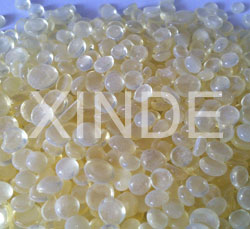
C5 Petroleum Resin
XD-1001J · XD-1001L · XD-1003JA pale-yellow granular thermoplastic solid resin produced by polymerization of the C5 fraction from ethylene plants, together with specific modifiers. It is compatible with NR, synthetic rubbers and styrene polymers (SIS, SBS, SEBS, EVA), and with natural tackifying resins such as terpene and rosin derivatives.
Properties: good water resistance, insulation, heat stability, light stability and chemical stability against acids and alkalis; strong adhesion; low thermal conductivity.
| Specification | Unit | XD-1001J | XD-1001L | XD-1003J |
|---|---|---|---|---|
| Softening point | °C | 95–110 | 95–105 | 95–105 |
| Colour | Gardner # | 3–6 | 3–6 | 3–6 |
| Wax cloud point | °C | ≤ 105 | — | — |
| Acid value | mgKOH/g | ≤ 1.0 | — | — |
| Melt viscosity (200 °C) | cps | ≤ 250 | — | — |
| Application | — | Adhesives | Hot-melt road marking | Tyre & rubber |
Used in hot-melt adhesives, PSA and sealants as a tackifying resin; in hot-melt road marking paint; as a tackifier and processing aid in rubber and plastics; and in paints and inks.
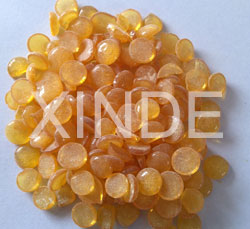
C9 Petroleum Resin
PR1-90 · PR1-100 · PR1-110 · PR1-120 · PR1-130 · PR1-140Produced from the C9 fraction of petroleum cracking through pre-treatment, polymerization and distillation. It is not a high polymer but an oligomer with molecular weight between 300 and 3000.
Features low acid value, good miscibility, water resistance, ethanol resistance and chemical resistance. C9 resin is normally not used alone but as an accelerator, conditioner or modifier together with other resins.
| Specification | Unit | PR1-90 | PR1-100 | PR1-110 | PR1-120 | PR1-130 | PR1-140 |
|---|---|---|---|---|---|---|---|
| Softening point | °C | 80–90 | 90–100 | 100–110 | 110–120 | 120–130 | 130–140 |
| Colour | Gardner # | 4–18 | |||||
| Acid value | mgKOH/g | ≤ 0.5 | |||||
| Bromine value | gBr/100g | By agreement | |||||
Paints — high softening point grades improve gloss, adhesion, hardness and acid/alkali resistance. Tyres and rubber — low softening point grades give tackifying, reinforcing and softening effects without affecting vulcanization. Adhesives — improves tack, acid/alkali resistance and water resistance, and lowers formulation cost. Printing inks — high softening point grades improve colour development, drying speed and gloss.
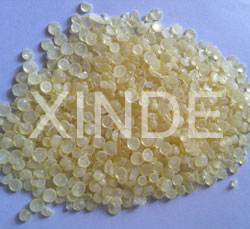
C5/C9 Copolymer Resin
PR1-90 · PR1-100 · PR1-110 · PR1-120 · PR1-130 · PR1-140A thermoplastic resin produced from both C5 and C9 fractions of petroleum cracking. It combines the advantages of C5 and C9 resins: low acid value, good miscibility, water and ethanol resistance, and chemical stability.
Because the structure carries no polar groups, it offers good water resistance, acid/alkali resistance, weather resistance and light-ageing resistance, and dissolves well in organic — especially petroleum — solvents.
| Specification | Unit | PR1-90 | PR1-100 | PR1-110 | PR1-120 | PR1-130 | PR1-140 |
|---|---|---|---|---|---|---|---|
| Softening point | °C | 80–90 | 90–100 | 100–110 | 110–120 | 120–130 | 130–140 |
| Colour | Gardner # | 4–18 | |||||
| Acid value | mgKOH/g | ≤ 0.5 | |||||
| Bromine value | gBr/100g | By agreement | |||||
In hot-melt adhesives and binders it provides stronger initial tack and can regulate the durability and bond strength of the adhesive/resin mixture, similar to rosin resin. In radial tyre and other demanding rubber goods it raises both particle-to-particle adhesion and cord adhesion.
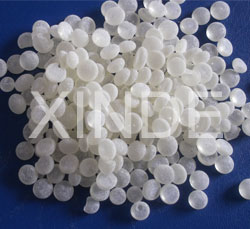
Hydrogenated C5/C9 Resin
XD-H90 · XD-H100 · XD-H110 · XD-H120 · XD-H130A water-white thermoplastic resin obtained by polymerizing unsaturated aliphatic and aromatic fractions of C5/C9 cracking distillate, then hydrogenating the result.
Its excellent compatibility with EVA, SBS and SIS makes it a preferred tackifier for hot-melt adhesives (HMA) and hot-melt pressure-sensitive adhesives (HMPSA), where low colour and heat resistance matter.
| Specification | Unit | XD-H90 | XD-H100 | XD-H110 | XD-H120 | XD-H130 |
|---|---|---|---|---|---|---|
| Softening point | °C | 89–96 | 95–105 | 105–115 | 115–125 | 125–135 |
| Colour | Gardner # | 0–3 | ||||
| Acid value | mgKOH/g | ≤ 0.2 | ||||
| Bromine value | gBr/100g | ≤ 25 | ||||
| Melt viscosity (Brookfield, 200 °C) | mPa·s | ≤ 200 | ||||
| Heat stability @200 °C | Ga # | ≤ 6 | ||||
Supplied as water-white solid. Typical uses: HMA and HMPSA tackifier, hygiene and non-woven adhesives, and any formulation where colour and odour must stay minimal.
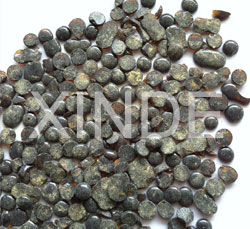
Coumarone Resin
PR-50 · PR-60 · PR-70 · PR-80 · PR-90 · PR-100 · PR-110A thermoplastic solid resin in dark-brown granular, block or sheet form, produced mainly from the heavy fraction of C9 distillate through polymerization.
It offers good solubility, miscibility, water resistance, insulation and chemical stability against acids and alkalis, with strong adhesion and low thermal conductivity.
| Specification | PR-50 | PR-60 | PR-70 | PR-80 | PR-90 | PR-100 | PR-110 |
|---|---|---|---|---|---|---|---|
| Softening point °C (ball & ring) | >40–50 | >50–60 | >60–70 | >70–80 | >80–90 | >90–100 | >100–110 |
| Appearance | Dark-brown granular solid | ||||||
| Colour (sample : toluene = 1:1) | 7 ± 1 | ||||||
| pH | ≤ 7 | ||||||
Low softening point grades are used in tyres and rubber for tackifying, reinforcing and softening. High softening point grades are used in paints to raise gloss, adhesion, hardness and acid/alkali resistance, and in printing inks.